
Mediocre Expectations
The shifting mythology of owning a home.

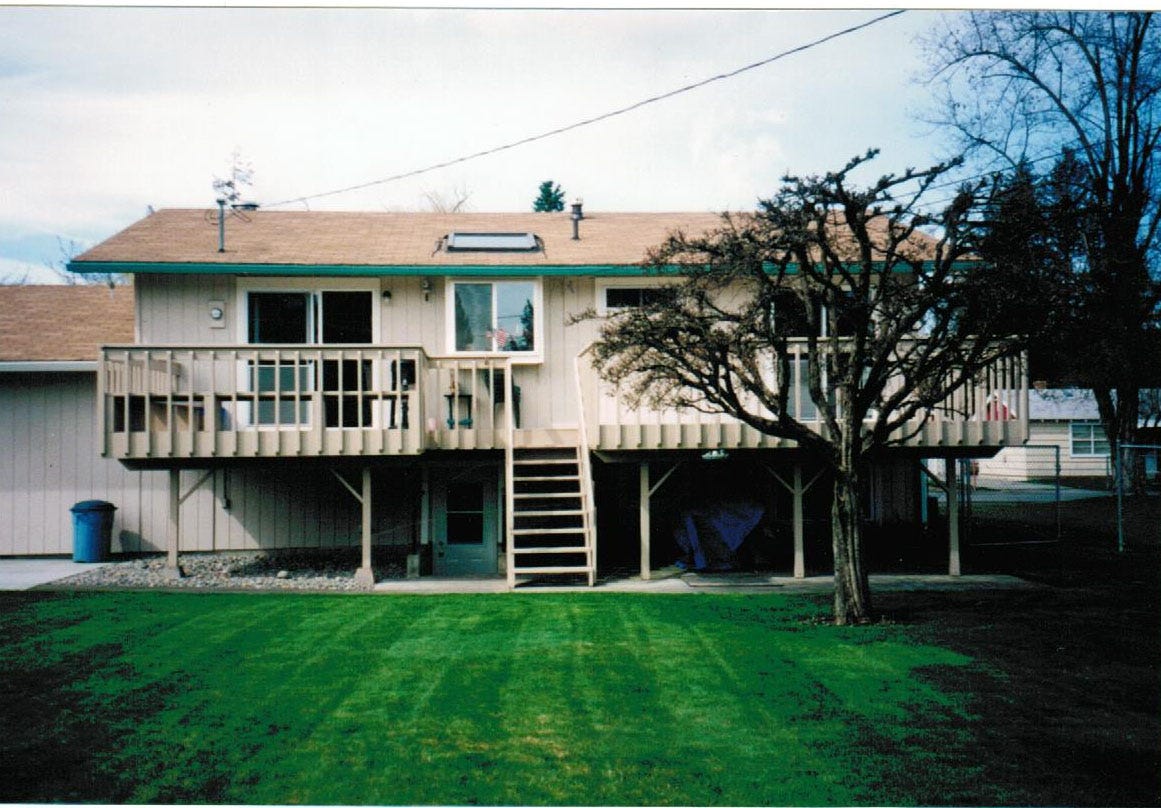
Recently I did a personal exercise where I tried to count the number of different homes I’ve lived in over my lifetime. At last count, it was over 40. That number seems a bit shocking considering I’m only 55. All the homes I lived in growing up were rentals, and all this may clue you into why, growing up, I thought of owning a home as the pinnacle of success.
Of course, consistent with other generation X Americans, owning a “home” in my mind was always equivalent to owning a single-family home, on a single-family lot. I dreamed of being able to paint my living room walls any color I wanted without asking the landlord for permission.
My dream finally came true in my early thirties, as a single mom with three kids, when I was able to purchase my first home. I took advantage of a government program that matched savings to go toward a down payment. It was a four bedroom, two bath, split-level on a quarter acre with a deck and an in-ground sprinkler system for the large back yard. I paid $115,000 for it in 2003 and painted one of the walls in my kitchen cobalt blue.
After I remarried three years later, my new husband and I sold the house for $135,000 and used the equity to buy a newer, 3 bedroom, 2 1/2 bathroom house for $345,000. Six years later, after the economy was tanking from the housing bubble recession and my marriage was falling apart, my house lost 1/3 of its value. My now ex-husband and I managed to sell it for $240,000. We were only able to walk away because of Obama’s loan-forgiveness program.
When I married my current husband, after paying off post-divorce debt, we were in a position to own again. He had been a home owner his entire adult life. He grew up with parents that always owned a single family home. But by the time we had saved up enough to put a downpayment on a house, housing costs had skyrocketed. We were looking at split-level houses like the first one I bought, built in the same era, and now we couldn’t get a house like that for anything less than $550,000. And that was with no upgrades - the original linoleum and avocado-green kitchen appliances.
We were in our mid-40s, a time of life when, if you’re going to buy something, you better do it quick because the mortgage might outlive you. After crunching the numbers, it just didn’t make much sense. After a lot of crying on my part, we resigned ourselves to being renters for the forseeable future. Or, atleast, I did. My husband is happy not to have to spend endless hours and dollars maintaining and fixing up a house and yard. I can’t help but feel like I’ve failed as an adult.
Fastforward to 2023 when the Province of British Columbia, following in the footsteps of the States of California and Oregon, as well as New Zealand, essentially outlawed single-family homes. Well, not outlawed exactly. They looked at local zoning regulations that had been in place for decades and realized that there were great swaths of land within most cities where the zoning only allowed building homes for one family. So that’s what people built. And this limitation of land-use eventually caught up with us in the form of insanely expensive housing.
B.C.s housing legislation prohibits cities with populations over 5,000 to have zoning that only allows one dwelling unit. In fact, cities must allow up to 4 units on lots of a certain size. Of course, this doesn’t mean that developers will stop building single-family homes, but it truly has the potential for changing the housing landscape for all of us.
I heard recently that there are more young adults living with their parents now than at any time since the great depression. They can’t afford housing generally, but in particular, the dream of ever buying a single-family home on a single-family lot is simply not possible for most young people anymore.
As a city planner, I’ve been happy to see the zoning changes, feeling for a while now that zoning has morphed from a tool for ensuring health and safety to mostly becoming a tool of exclusion. I’ve found myself trying to think positively on behalf of young people as in “it’s okay - most people in Europe don’t own their own plot of land. You can still own your own home - it just might be a townhouse or a condo. Less grass to mow!”
But then, of course, I think about my own disappointment when I realized my dream of owning a home was squashed. Its hard to shake the feeling that not the system, but I, have failed somehow. I was thinking about this recently when a friend was telling me her son feels like less of a man because he knows he will never be able to afford a house. Maybe I, and her son, will come around to a different homeownership dream. I guess we’ll see.